

Description
Conflex v.10
Conflex Version 10 is an advanced molecular conformational analysis and molecular modeling software solution designed to help researchers investigate the three-dimensional structure, conformational flexibility, and energetics of molecules. It provides an integrated environment for generating, analyzing, comparing, and visualizing molecular conformations, making it a valuable tool for research in computational chemistry, medicinal chemistry, drug discovery, structural biology, and molecular modeling.
Conflex enables researchers to explore the conformational space of molecules efficiently and identify energetically favorable structures. By combining conformational search techniques with molecular mechanics-based energy calculations and intuitive molecular visualization, the software assists in understanding how molecular structure and flexibility influence chemical and biological behavior.
Key Features
Advanced Conformational Search
Conflex provides powerful conformational search capabilities for systematically exploring the possible three-dimensional arrangements of molecular structures. It can generate diverse conformers and identify low-energy conformations for further investigation.
Molecular Mechanics Calculations
The software supports molecular mechanics-based energy evaluation, allowing users to calculate and compare the relative energies of different molecular conformations. This helps researchers identify stable and energetically preferred structures.
Conformational Analysis
Conflex allows users to examine the conformational flexibility of molecules and investigate relationships between different conformers. Researchers can compare molecular geometries and analyze structural changes associated with conformational transitions.
3D Molecular Visualization
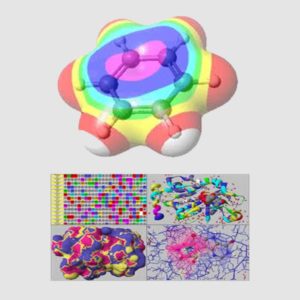
Molecules and generated conformations can be viewed and inspected in three dimensions, providing an intuitive way to understand molecular geometry, steric effects, and conformational differences.
Energy-Based Conformer Evaluation
Generated conformers can be evaluated according to their calculated energies, allowing researchers to prioritize low-energy structures and investigate the energetic landscape of flexible molecules.
Molecular Structure Exploration
Conflex can be used to investigate the relationship between molecular structure, flexibility, and energetics. This is particularly useful for molecules with multiple rotatable bonds and complex conformational landscapes.
Research Applications
Conflex Version 10 can support a wide range of research activities, including:
- Drug discovery and medicinal chemistry
- Computational chemistry
- Molecular modeling
- Conformational analysis
- Structure–activity relationship (SAR) studies
- Ligand and small-molecule analysis
- Structural biology research
- Chemical and pharmaceutical research
- Academic teaching and research
Benefits for Researchers
Conflex Version 10 provides researchers with a practical environment for moving from a molecular structure to a collection of possible conformations and subsequently evaluating their relative stability. Its conformational-search and molecular-analysis capabilities can help reduce the complexity associated with studying flexible molecules and provide structural information for downstream computational and experimental studies.
Who Can Use Conflex?
Conflex is suitable for universities, academic research laboratories, pharmaceutical companies, biotechnology organizations, chemical research institutes, and R&D departments working with molecular structure and computational modeling.
Whether the objective is to identify energetically favorable conformations, investigate molecular flexibility, or support computational drug-discovery workflows, Conflex Version 10 provides tools for systematic conformational exploration and molecular analysis.
Conflex Version 10 at a Glance
Software Category: Molecular Modeling & Conformational Analysis
Primary Application: Conformational Search and Molecular Structure Analysis
Fields: Computational Chemistry, Medicinal Chemistry, Drug Discovery, Structural Biology
Users: Academic Researchers, Pharmaceutical R&D, Chemical & Biotechnology Research Groups